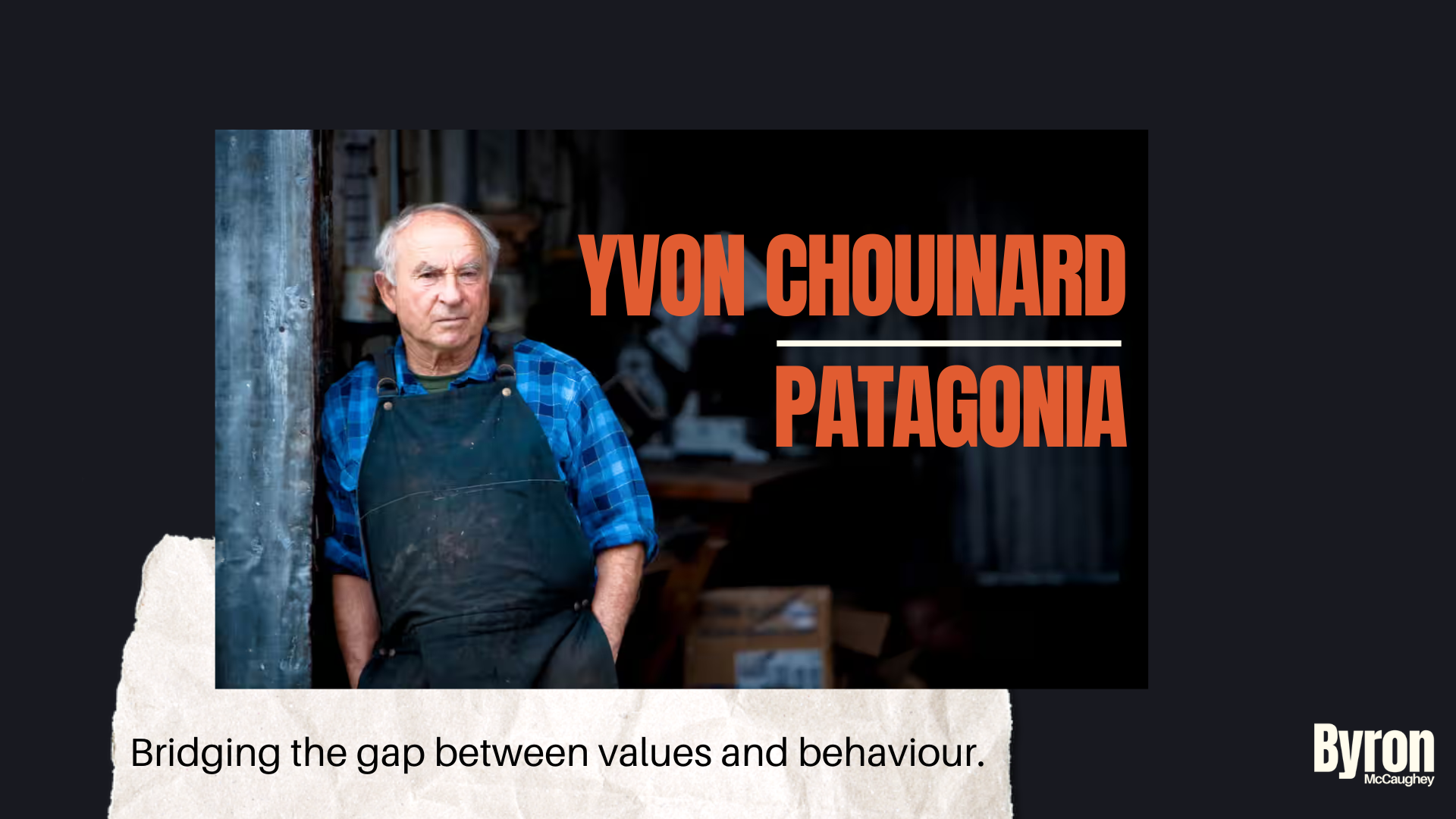
In the early ‘90s, Yvon Chouinard, the founder of Patagonia, had a problem. Well, two problems.
The first was growing pains. Patagonia entered the new decade riding a wave of 30-50% annual growth, but with it came a fragmented company structure that was inefficient and lacked unity.
So Yvon sought the counsel of the late Dr. Michael Kami, a famed corporate strategist. During their first meeting, Kami asked why Patagonia was in business. Yvon answered that their goal was to make money to donate to protect the planet.
Kami paused, considered the answer, and replied:
“I think that’s bullshit. If you’re serious about giving money away, you’d sell the company for a hundred million or so, keep a couple million for yourselves, and put the rest in a foundation.”
Yvon didn’t want to sell, and left the meeting feeling confused—a natural response considering the challenge to his self-identity and core values.
The second problem was the ‘91 recession. While Yvon was still trying to figure out why he was really in business, revenue halved, and due to the aggressive expansion of workforce and facilities to maintain high growth, they almost went bankrupt.
On a single day, they fired 120 people.
Yvon calls it the darkest day in Patagonia’s history. Yet, this low point was a catalyst for change. Yvon embarked on a soul-searching ‘walkabout’ in the actual Patagonia, seeking to redefine both his and his company’s purpose.
Upon returning, Yvon had the answer to Dr Kami’s question:
“I knew, after thirty five years, why I was in business….I wanted to create in Patagonia a model other businesses could look to in their own searches for environmental stewardship and sustainability.”
This evolution of his why—from donating profits to becoming an example of sustainable business practices—transformed Patagonia. They controlled growth to a sustainable rate, streamlined management, and focused more intensely on environmental initiatives.
Yvon’s journey underscores a critical lesson: understanding your why is a must (see Simon Sinek), but aligning your actions with those values is what truly counts. It prompts us to ask ourselves if our current behaviours mirror our values and whether they are moving us closer or further away from them.
So, I invite you to try a little exercise:
Imagine it’s your 90th birthday. Looking back over your life, what aspects would make you feel it was a success? Now, what small action can you take today to step closer to that life?
An example—albeit a big one—is that in 2022, disturbed by the level of personal wealth being attributed to him, Yvon announced that all future Patagonia profits (that’s around $100 million a year!) would be dedicated to saving the planet. This move lessened the internal conflict that arises when we live in ways inconsistent with our values.
But don’t panic. We need not make such grand gestures to start realigning our actions with our values. Small, manageable steps can begin to close the gap, and staying flexible allows your why to evolve based on new insights, just as Yvon’s did.
Part of Short Tales of Psychology – a series about interesting humans and the psychological lessons we can apply to enhance our mental wellbeing and optimise performance.