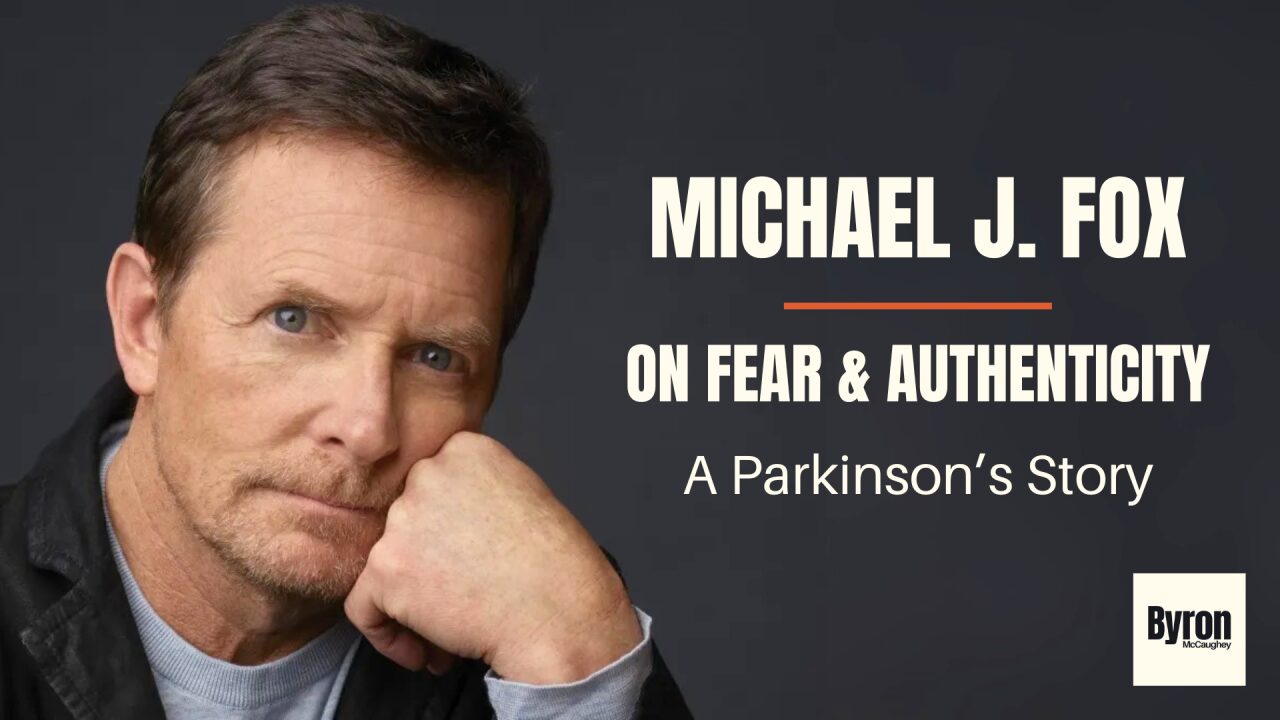
Michael J. Fox: On Fear & Authenticity - A Parkinson's Story
By Byron McCaughey · 28 July 2025
Michael J. Fox woke up after a night out drinking with Woody Harrelson and noticed his pinky finger was trembling. It was 1991, and the 29-year-old was the toast of Hollywood after the hugely successful Back to the Future trilogy.
Shortly after, he was diagnosed with Parkinson's disease.
"I never gave a second thought to sharing my diagnosis with anyone…I intended to pretend as if none of this was actually happening to me," Michael recalled.
Plagued by the fear that people would reject him if they knew, he went to great lengths to keep the diagnosis hidden from everyone but his family. He kept working relentlessly. Drank to numb himself. Took pills. And painfully contorted his body during takes to mask the tremors.
This went on for seven years.
And it was taking a toll on him, his family and the quality of his work.
"You are only as sick as your secrets," he later reflected.
In 1998, despite the fear, Michael told the world he had Parkinson's disease. And something unexpected happened.
Audiences didn't reject him – they embraced him.
He went on to raise over $2.5 billion for Parkinson's research. But perhaps the greatest shift was psychological:
"After all those years of hiding my symptoms, I could let it go. I realised I didn't have to do anything but be myself."
Michael's journey reveals something profound about how our mind tries to protect us. Fear of rejection is one of our most primal anxieties – it once meant survival, but now it can trap us in exhausting performances.
Living this way - guarded, masked, inauthentic - takes its toll. On our wellbeing. On our relationships. On our peace of mind.
Michael's story is a reminder:
Thank your mind for trying to keep you safe with stories of what could go wrong, but still choose to show up as your true self.
Even with the risks. What have you been holding back? What would it feel like to show up a little more freely?
Part of Short Tales of Psychology - a series about interesting humans and the psychological lessons we can apply to enhance our mental wellbeing and optimise performance. Subscribe here.
BM
Byron McCaughey
Psychologist for Entrepreneurs. Former VC-backed founder. Writes Short Tales of Psychology.