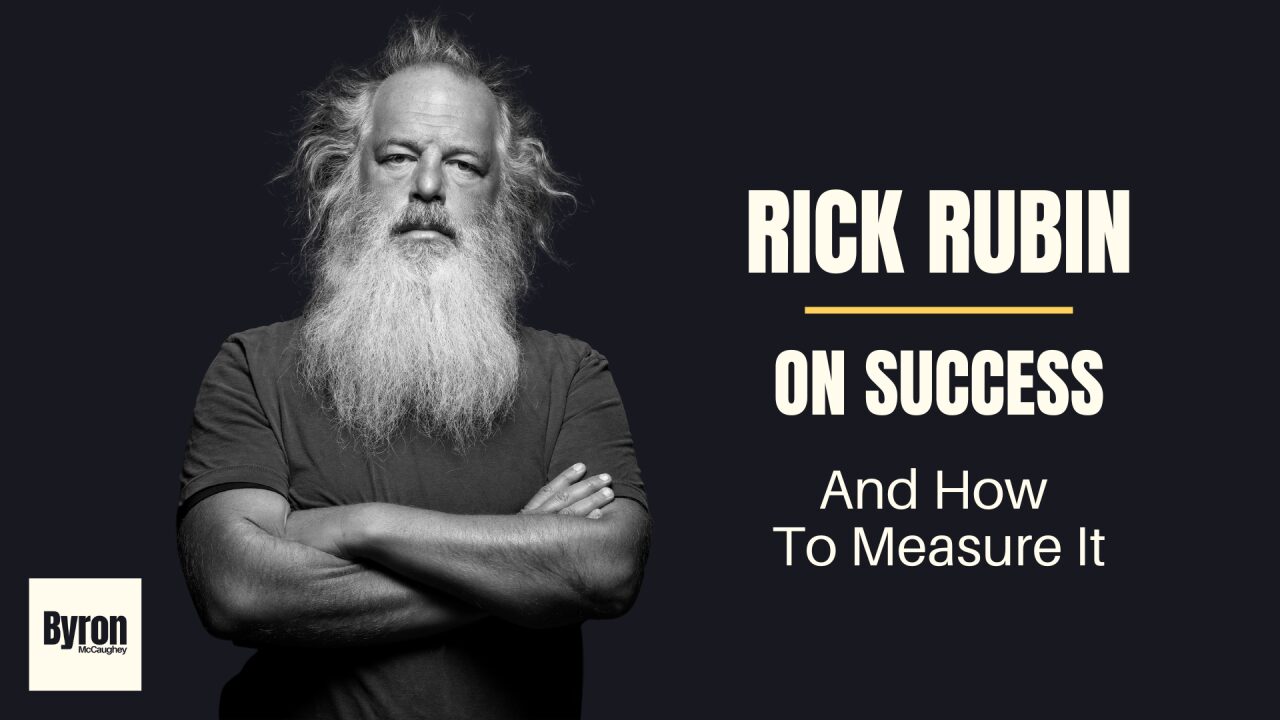
Rick Rubin – the producer behind many of your favourite albums* – doesn't measure the success of a piece of work by popularity, sales or applause. For him, it's the private experience just before a release.
"When you've done all you can to bring out the work's great potential. When you're pleased and ready to let go," says Rubin.
He argues that success has nothing to do with external validation, because those variables are subject to 'market conditions' - timing, the mood of the culture, competing releases, and countless other factors outside our control.
"The only [variable] we can control is doing our best work, sharing it, starting the next, and not looking back."
How might your creative output change if this became your definition of success?
Would you finally share a few pages of your book?
Would you launch the business idea you've been sitting on?
Would a small number of likes on your blog no longer stop you from writing the next one?
From a psychological perspective, when we shift from being outcome-driven ('I hope people like this') to values-driven ('This matters to me'), we let go of the fear of judgment. That shift not only makes for a more enjoyable creative process - it often leads to more original, authentic work.
So if success is working hard on something and feeling proud just before putting it out there – where might your next success come from?
My favs: Californication (Red Hot Chilli Peppers), Licensed to Ill (Beastie Boys), The New Abnormal (The Strokes), 99 Problems (Jay Z)… the list goes on.
Part of Short Tales of Psychology - a series about interesting humans and the psychological lessons we can apply to enhance our mental wellbeing and optimise performance. Subscribe here.
BM
Byron McCaughey
Psychologist for Entrepreneurs. Former VC-backed founder. Writes Short Tales of Psychology.